
- Home
- Industries
Built for the parts that cannot be wrong.
Thin walls that ring like a bell, alloys that eat cutters, pockets deeper than any sensible tool reach, and tolerances measured in microns. These are the jobs where planning beats horsepower.
Aerospace
Aerospace is where our discipline comes from, and it sets the standard for everything else we do. Traceability, revision control, verified programmes and documentation are not premium extras here — they are the entry ticket.
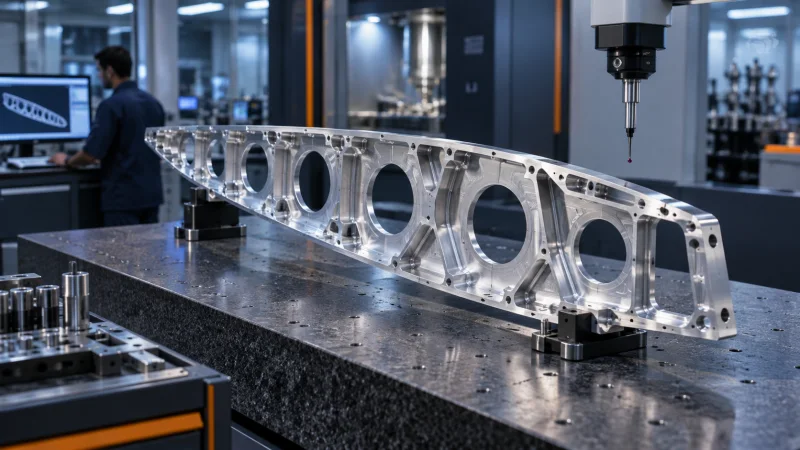
Aerostructures
Ribs, spars, frames, bulkheads and skins. Long, thin, deflection-prone parts in aluminium and titanium where the fixture matters as much as the toolpath.
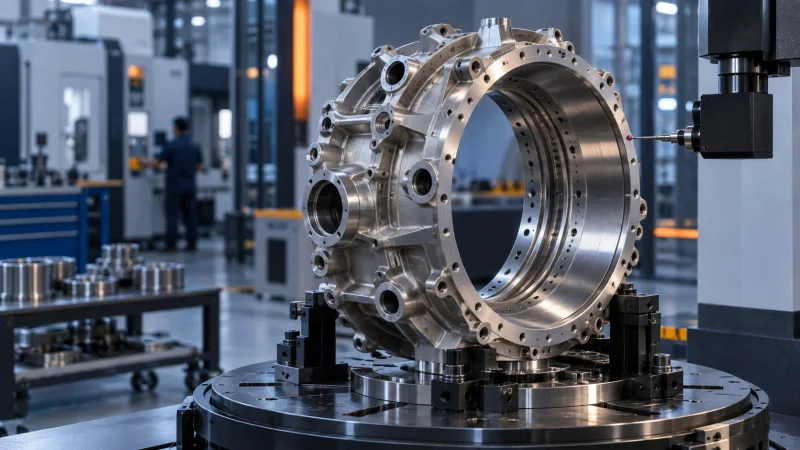
Aero Engine
Casings, blisks, blades and vanes in nickel-based superalloys and titanium. Low-speed, high-discipline machining where tool life is the whole battle.
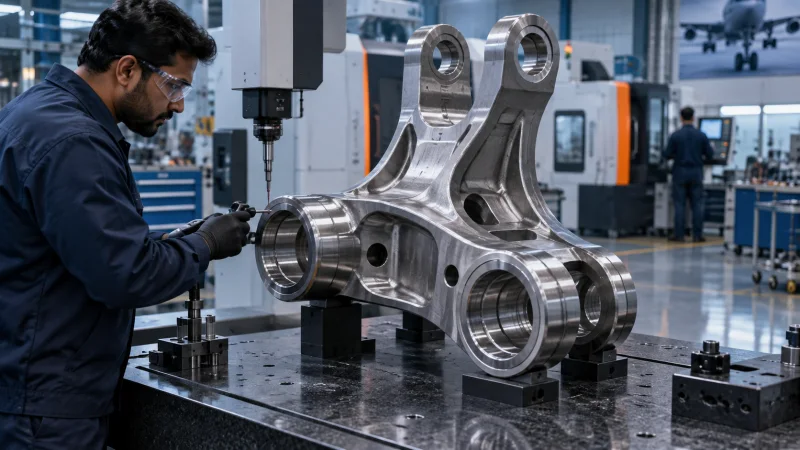
Landing Gear
High-strength steel forgings with deep bores, tight concentricity and surface finish specifications that leave no room for a second attempt.
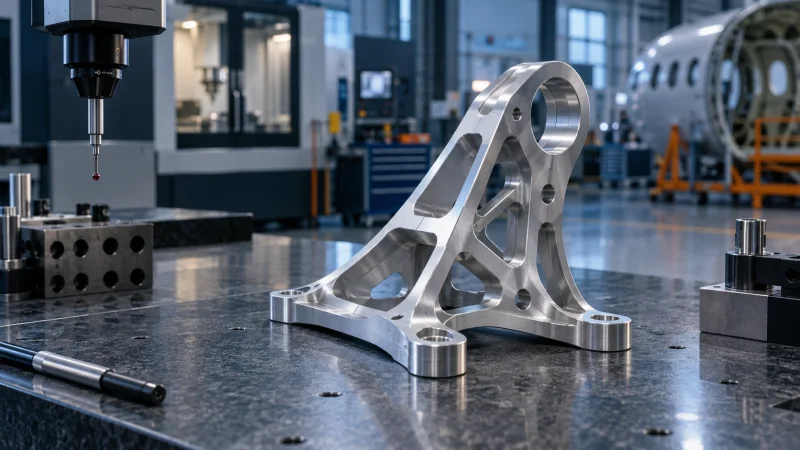
Aircraft Interiors
Brackets, fittings, trim structures and monument components — high mix, moderate volume, and unforgiving on weight and cosmetic finish.
What aerospace work demands
- Traceability end to end — every revision, every programme, every simulation run, recorded.
- First-article discipline — AS9102 packs assembled as the job runs, not reconstructed afterwards.
- Verified programmes only — nothing reaches a spindle that has not been simulated against real kinematics.
- Material-aware programming — Inconel, Ti-6Al-4V and 15-5PH each demand their own strategy, not a scaled feedrate.
Where we typically help
- New part introduction — process route, fixture and programme for a part family entering production.
- Capacity overflow — your engineers are the bottleneck, not your machines.
- Legacy recovery — parts that only exist as 2D prints and one retiring person's memory.
- Crash and scrap investigation — programmes audited, verified and reissued clean.
Beyond aerospace
The same engineering discipline transfers directly. What changes is the documentation your customer expects and the economics of the batch size.
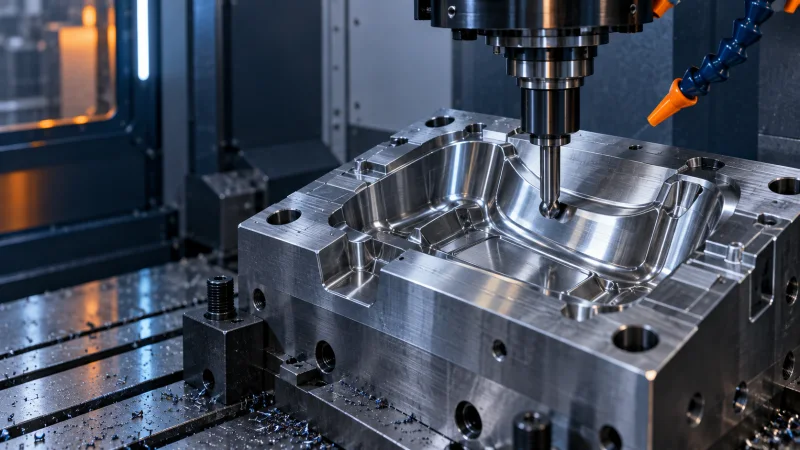
Tool & Die
Cavities, cores, press tools and moulds. Hard milling strategies, surface finish driven by polish time, and electrode design where it pays.
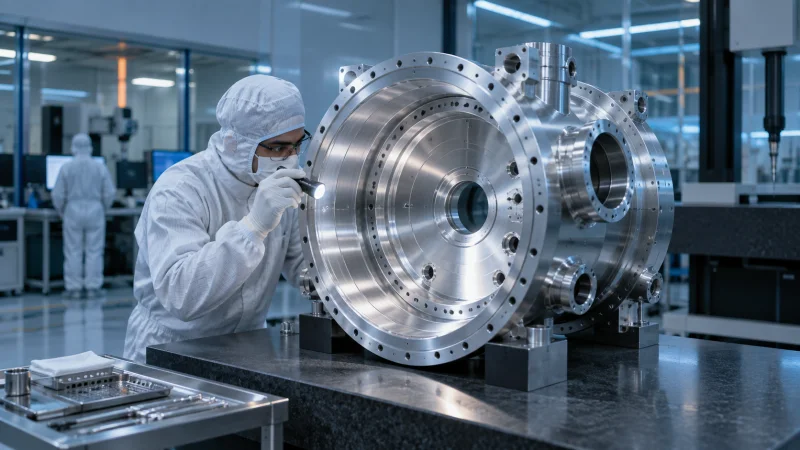
Semiconductor
Chamber components, flanges and manifolds in aluminium and stainless. Cleanliness, flatness and burr-free edges dominate every decision.
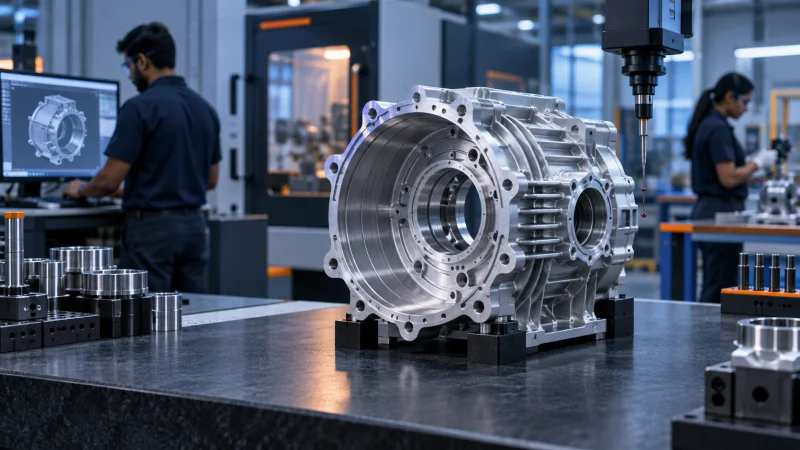
Automotive & EV
Prototype and low-volume components, battery enclosures and motor housings, plus PPAP documentation to IATF expectations.
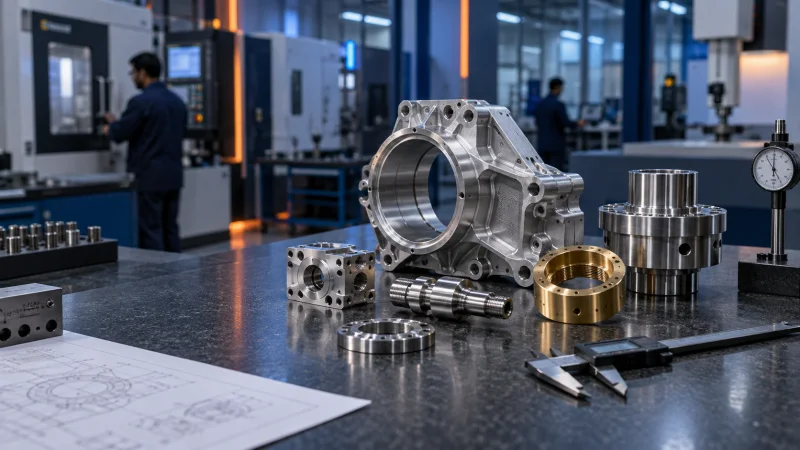
Precision Engineering
Hydraulics, defence, energy, medical device components and job-shop work where the part is difficult enough to need real planning.
What we programme, and what it demands
Material dictates strategy far more than geometry does. Programming titanium like aluminium with the feed turned down is how shops burn through tooling budgets.
| Material group | Typical grades | What drives the strategy |
|---|---|---|
| Aluminium alloys | 6061, 7075, 2024, 7050 | High removal rates, chip evacuation, and controlling distortion as residual stress releases |
| Titanium alloys | Ti-6Al-4V, Ti-5553 | Heat concentrating at the cutting edge — low speed, constant engagement, relentless coolant |
| Nickel superalloys | Inconel 718, 625, Waspaloy | Work hardening and notch wear; consistent depth of cut and disciplined tool-change intervals |
| Stainless steels | 15-5PH, 17-4PH, 316L, 304 | Built-up edge and work hardening; sharp geometry and no dwelling in the cut |
| Tool & alloy steels | H13, P20, 4340, D2 | Hardness at the finish stage; hard milling with light, fast, consistent passes |
| Plastics & composites | PEEK, Delrin, CFRP, GFRP | Delamination and fibre pull-out; dedicated tool geometry and dust extraction |
Send us a drawing. We’ll send back a plan.
Share a 2D print, a STEP file or a scope note. You get a written response with feasibility, approach and an indicative timeline — no obligation, and your data stays yours.